
Occasions
Why Are Cakes Important in Celebrations? 10 Meaningful Reasons
Jul
A cake is not important simply because it is sweet. Its real value is that it turns an occasion into a shared moment. People gather around it, pause what they are doing, recognise the person or milestone, take photographs and then share the same food. Few other desserts perform all those jobs at once.
That is why cakes appear at birthdays, weddings, anniversaries, retirements, promotions, farewells and festivals. The design may change, but the purpose remains similar: a cake gives the celebration a visible centre and a simple ritual in which everyone can participate.
Why Are Cakes Important in Celebrations?
Cakes are important in celebrations because they mark a milestone, bring people together and create a memorable ritual through presenting, cutting and sharing. They also work as edible symbols: a name, age, message, photograph, colour or theme can communicate exactly what is being celebrated.
The importance of a cake therefore comes from more than flavour. It combines five useful roles:
- Symbol: it shows that the day is different from an ordinary day.
- Ritual: it creates a recognised sequence of gathering, wishing, cutting and sharing.
- Centrepiece: it gives guests a natural focal point.
- Personal message: its flavour and design can reflect the person or occasion.
- Shared food: one cake can be divided so that everyone receives part of the celebration.
1. A Cake Marks the Moment
Many important events are transitions: a person turns another year older, a couple begins married life, an employee completes a long career or a student reaches a new stage. These changes may be emotionally significant, but they are not always visible.
A cake makes the transition tangible. Writing an age, date or congratulatory message on it gives the occasion a clear identity. When the cake arrives, guests immediately understand that the central moment of the gathering is about to begin.
This is also why even a small cake can feel meaningful. Its importance is not determined only by its size or price; it comes from the moment it has been chosen to mark.
2. Cake Cutting Creates a Shared Ritual
A celebration can otherwise feel like an ordinary meal or social gathering. Cake cutting creates a short, familiar sequence:
- The cake is brought out.
- Guests gather in one place.
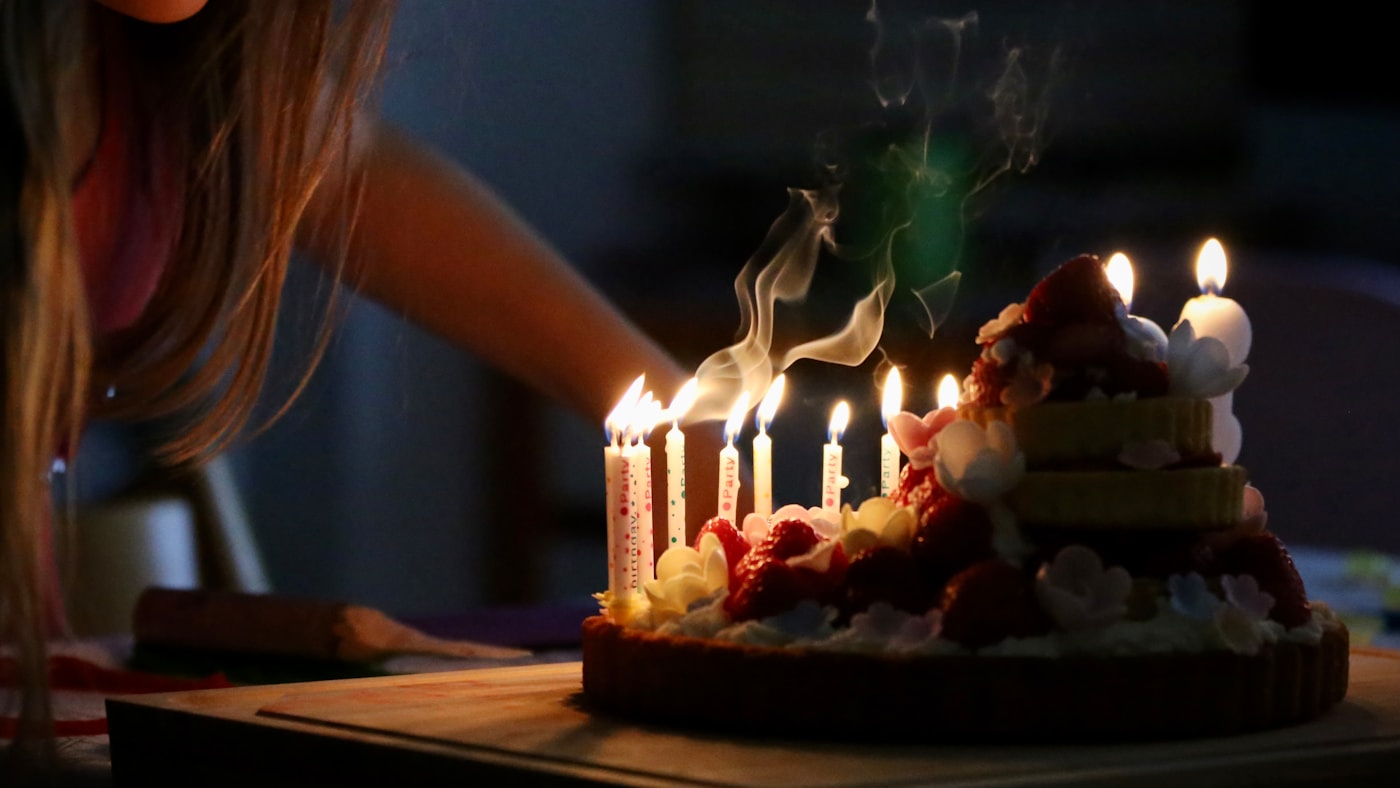
- Candles are lit or a message is read.
- The person or couple at the centre of the occasion cuts the cake.
- The first pieces are offered to loved ones.
- The remaining cake is divided among the guests.
This sequence gives everyone a role, even if that role is simply singing, clapping, taking a photograph or accepting a slice. Research published in Psychological Science found that performing a ritual before eating could increase attention to and enjoyment of the food. The research was not specifically a test of birthday parties, but it helps explain why a ceremonial slice can feel more satisfying than the same cake eaten casually.
3. Cakes Bring People Together
The cake table is one of the few places where guests of different ages naturally assemble at the same time. Children wait for the candles, adults call relatives into the room, someone prepares the camera and the conversation briefly focuses on one shared experience.
Eating together also has a broader social value. Research reported by the University of Oxford found an association between eating socially and stronger feelings of connection, happiness and satisfaction with life. A cake cannot create a close relationship by itself, but sharing it can support the sense of participation that makes celebrations emotionally valuable.
4. A Cake Becomes the Visual Centrepiece
Decorations, food and music may fill an entire venue, but the cake usually identifies the purpose of the occasion most clearly. A wedding cake, a child’s character cake and a retirement cake communicate three completely different stories before anyone reads the message.
This visual role matters because celebrations need a focal point. Guests know where to gather, photographers know which moment to capture and the host has a natural way to move the event from conversation to ceremony.
The effect does not require heavy fondant or an elaborate multi-tiered design. A neatly finished homemade cake with a handwritten message can provide the same focus.
5. Personalisation Turns Cake into a Message
A generic dessert satisfies hunger; a personalised cake says something about the recipient. Its flavour may be their favourite, its colours may match the occasion, and its design can represent a hobby, profession, memory or private joke.
Modern designer cakes can depict interests ranging from cricket and travel to books, music and fitness. A photo cake can place a family memory directly at the centre of the table. Even a few words written in icing can make an ordinary sponge feel specifically chosen rather than conveniently purchased.
This personalisation is one reason cake remains relevant even when other desserts are available. It functions as both food and a greeting card that can be shared.
6. Cake Helps Create Strong Memories
People do not remember every dish served at a party, but many remember the cake: its colour, the message, a candle that would not go out, who received the first piece or what happened while the photographs were being taken.
Several sensory details arrive together during cake cutting—light from candles, the smell of the cake, applause, music, taste and physical closeness. The combination gives the mind more details with which to reconstruct the event later.
The cake also appears repeatedly in photographs and videos. Years later, those images may show not just the dessert but the people who gathered around it, making the cake a visual anchor for the memory.
7. Sharing a Cake Expresses Care
Offering the first slice carries a meaning that is larger than the portion itself. In many Indian families, the celebrant first feeds cake to parents, a spouse, children or close friends. They may then feed a small piece back. The exchange is informal, but it publicly recognises affection and importance.
A homemade cake can express time and effort. A carefully selected cake can show that someone remembered the recipient’s favourite flavour or dietary preference. In both cases, the emotional message is created by the choice, not merely by the sugar.
8. Cakes Adapt to Almost Every Occasion
Cake has survived changing tastes because it is not one fixed food. It can be simple or elaborate, traditional or modern, individual or large enough for hundreds of guests. The same basic idea can be adapted to very different milestones.
| Occasion | What the cake represents | Common design approach |
|---|---|---|
| Birthday | Another year of life and personal identity | Age, name, candles, favourite theme or photograph |
| Wedding | A shared beginning and hospitality for guests | Tiered, floral, elegant or coordinated with the wedding colours |
| Anniversary | Time shared by a couple | Names, year count, flowers, hearts or a memorable photograph |
| Baby shower | Welcome and anticipation | Soft colours, playful details or a family theme |
| Graduation or promotion | Achievement and progress | Congratulations message, profession or academic symbols |
| Farewell or retirement | Appreciation and closure | Thank-you message, workplace references or shared memories |
| Festival or holiday | Seasonal tradition and togetherness | Flavours and decoration connected with the festival |
9. Cake Can Feel Special Without Being Unreachable
Historically, rich cakes required costly ingredients and specialist baking equipment. That made them a luxury reserved for important occasions. Modern bakeries and home ovens have made cake far more accessible, but a little of that “special occasion” feeling remains.
At the same time, hosts can choose according to their budget. A small half-kilogram cake, a tray of cupcakes or a homemade tea cake can still create a complete cake-cutting moment. More expensive decoration may increase visual detail, but it does not automatically make the celebration more meaningful.
10. Cakes Can Include Different Tastes and Dietary Needs
Another reason cakes remain useful is their flexibility. Hosts can select chocolate, fruit, coffee, vanilla, butterscotch, red velvet or flavours inspired by Indian sweets. Formats range from cream cakes and cheesecakes to cupcakes and dry cakes.
Recipes can also be adapted. Eggless cakes are widely available, while some bakeries offer vegan, gluten-conscious or reduced-sugar options. These labels should still be checked carefully when a guest has a serious allergy or medical restriction; “eggless,” for example, does not automatically mean dairy-free or vegan.
How Did Cake Become a Celebration Tradition?
There is no single inventor of the celebration cake. Sweetened breads and ceremonial cakes appeared in several ancient cultures, while later European customs connected richer cakes with weddings, religious festivals and important family events.
The modern birthday ritual developed more clearly in Germany, where children’s birthday celebrations used cakes with age-related candles. Improvements in ovens, ingredients and commercial baking eventually made decorated cakes available to more families.
India already had deep traditions of marking good news and festivals with mithai. Western-style cakes did not simply replace those customs; the two traditions began to coexist. It is now common to see cake, laddoo, barfi and other sweets served at the same celebration.
For a closer account of candles, Kinderfest and the development of the modern birthday ritual, read our guide to why birthdays have cakes.
Is a Celebration Incomplete Without Cake?
No. Calling every celebration “incomplete” without cake exaggerates its importance. Families have celebrated with mithai, fruit, sweet breads, kheer, halwa and many other foods for centuries. People with dietary restrictions may prefer a completely different centrepiece.
What a celebration needs is recognition, participation and a shared moment—not one compulsory dessert. Cake is popular because it provides all three conveniently. If another food carries greater meaning for a family or culture, it can serve the same purpose.
How to Choose a Cake That Fits the Celebration
The most suitable cake is not necessarily the most expensive one. Before ordering, consider the following:
- Guest count: estimate realistic portions rather than ordering only by appearance.
- Recipient’s preference: choose their flavour and style instead of the current trend.
- Dietary requirements: confirm eggs, dairy, nuts, gluten and other allergens when relevant.
- Setting and weather: delicate cream cakes require careful temperature control, particularly during Delhi summers.
- Timing: customised designs usually need more preparation than standard cakes.
- Transport: tall, tiered and heavily decorated cakes need more careful delivery than compact designs.
When arranging cake delivery in Delhi, confirm the delivery date, available time slot, correct address and design requirements before payment. A beautiful cake arriving after the main ceremony has lost much of its practical value.
Frequently Asked Questions
Why is cake important at birthdays?
A birthday cake marks another year of life and creates a ritual around candles, wishes, singing and sharing. Its name, age and design can also reflect the individual being celebrated.
What does cutting a cake symbolise?
Its meaning depends on the occasion. In general, cutting begins the sharing of the celebration. At a wedding it is a joint action by the couple; at a birthday it places the celebrant at the centre of a shared ritual.
Why are cakes used for weddings and anniversaries?
Cakes provide a ceremonial centrepiece that can be shared with guests. Their decoration can also represent the couple, the wedding style or the number of years being celebrated.
Why does sharing cake feel meaningful?
Everyone receives a portion of the same symbolic centrepiece. Offering the first slice to someone can also communicate affection, respect or gratitude.
Does a celebration need an expensive cake?
No. The ritual and personal meaning matter more than size, price or decoration. A homemade cake or a few cupcakes can create the same shared moment.
Can a celebration be meaningful without cake?
Yes. Cake is a flexible and widely recognised tradition, not a requirement. Any food or activity that brings people together and marks the occasion can take its place.
More Than a Dessert
The strongest explanation for why cakes are important is not that everybody loves sweets. It is that cake performs several social jobs unusually well. It marks a transition, gathers people into one place, carries a personal message, creates a photographable ritual and can be shared immediately afterwards.
That combination explains why cake continues to appear at occasions that otherwise have little in common. The flavour and decoration may change, but the deeper purpose remains the same: to make an important moment visible, shared and easier to remember.
