
Occasions
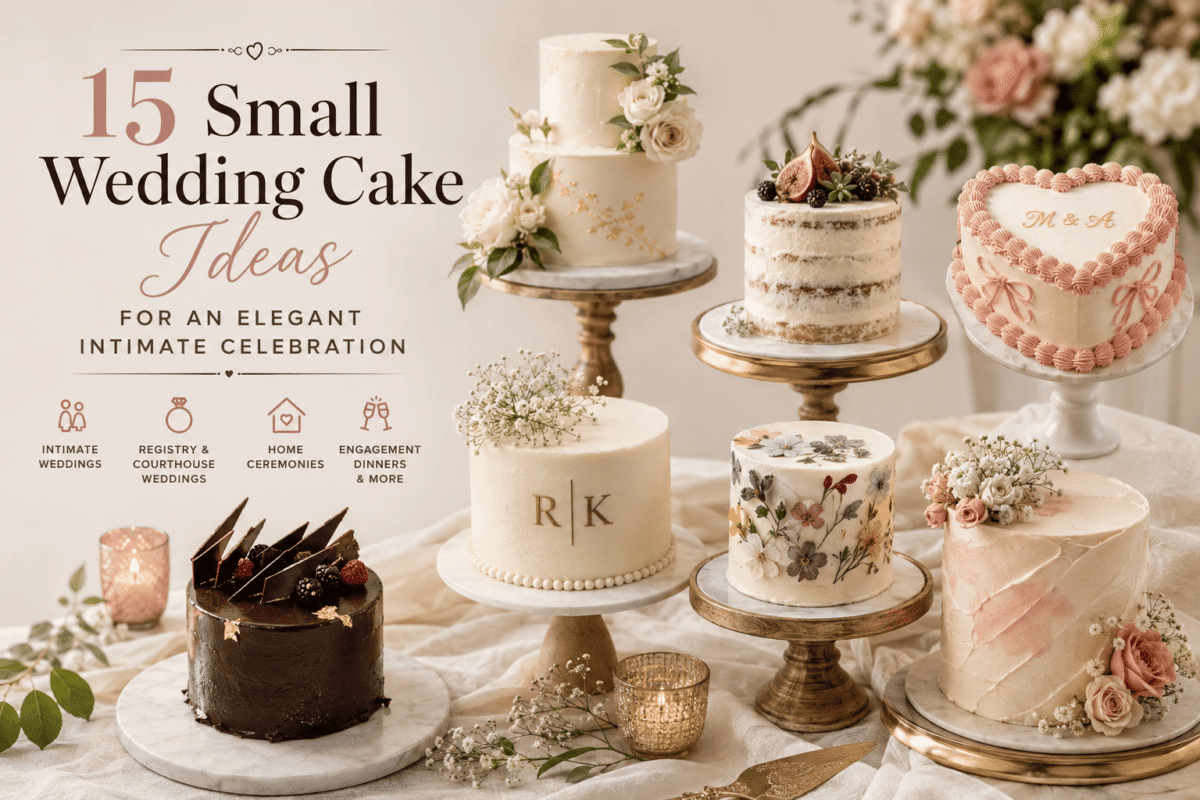
15 Small Wedding Cake Ideas for an Elegant Intimate Celebration
Aug
A wedding cake does not need several towering tiers to hold an important place in the celebration. For an intimate wedding, registry signing, engagement dinner, home ceremony or courthouse wedding, a carefully designed compact cake can feel more considered than a centrepiece built for unnecessary scale.
These small wedding cake ideas focus on proportion, flavour, presentation and personal detail. They suit couples who prefer a smaller guest list, a relaxed venue or meaningful design choices over sheer size. With the right height, stand and decoration, even a single tier can create a strong cake-cutting photograph.
A small wedding cake may be a one-tier celebration cake, a compact two-tier cake, a ceremonial cutting cake, individual miniature cakes or a display cake supported by additional desserts.
15 Small Wedding Cake Ideas Worth Considering
1. Smooth White Buttercream Cake with Fresh Flowers
A smooth white buttercream cake is a refined alternative to a heavily decorated traditional design. Its clean surface gives one carefully placed flower cluster room to be noticed. Keep the blooms proportional: a petite cake usually suits smaller flower heads, buds or a short asymmetrical arrangement rather than a full cascade. This style works for a hotel lunch, home wedding or chapel ceremony. Match the flowers to one variety used in the ceremony. Vanilla with berry compote suits the restrained finish.
2. Vintage Piped Heart-Shaped Wedding Cake
A heart-shaped cake with shell borders, small bows and neat piped edges has a playful retro character. Cherries, initials or a short message can be added, provided the lettering remains readable and the top is not overcrowded. It suits registry weddings, courthouse ceremonies and private dinners. Use initials in a type style inspired by the invitation. Vanilla-strawberry or chocolate-cherry can reinforce the nostalgic look.
3. Minimalist Monogram Wedding Cake
This one-tier wedding cake uses smooth frosting, restrained detailing and one clear personalised feature: the couple’s monogram. The initials may be piped, embossed, painted or placed on a slim topper. With little else on the surface, typography becomes the design rather than an afterthought. It works for modern restaurants and civil ceremonies. Echo the invitation lettering instead of using a generic script. A tall profile adds presence.
4. Small Two-Tier Cake with Uneven Tier Heights
A compact two-tier cake looks more architectural when the tiers have different heights. A tall lower tier with a shallow upper tier feels grounded; reversing the proportions creates a more editorial silhouette. This adds visual interest without making the cake unnecessarily wide. It suits galleries, modern hotels and structured décor. Finish the tier join with a fine line or one floral accent. Two tiers can also hold complementary flavours.
5. Textured Buttercream Wedding Cake
Palette-knife strokes, fine ridges, soft ruffles or a plaster-like finish give buttercream depth without elaborate decoration. Texture catches side lighting and creates shadows, helping a neutral ivory, beige or soft-grey cake photograph clearly. This design complements modern, coastal or garden settings. The finish can echo linen, handmade paper or a textured backdrop. Limit extra decoration to a small topper or a few petals.
6. Pressed-Flower Wedding Cake
A pressed-flower cake places flat botanical details across smooth buttercream or fondant, creating the look of a preserved garden or botanical illustration. Spaced flowers usually work better on a small surface than dense overlapping layers. It suits garden ceremonies and art-led receptions. Use colours related to the bouquet or invitation artwork. Not every flower is safe for food contact, so confirm every variety and application method with the baker.
7. Semi-Naked Cake with Seasonal Fruit
A semi-naked cake leaves a thin veil of frosting around visible sponge layers, giving it a relaxed appearance. Berries, figs, citrus or other suitable seasonal fruit can add colour, but selection should depend on quality, stability and local availability. It suits farmhouse venues, garden lunches and brunch weddings. Ask for deliberate fruit placement rather than scattered decoration. Vanilla-berry or almond-citrus can complement the natural presentation.
8. Pearl-Detailed Wedding Cake
Edible pearls can give a compact cake a bridal finish without covering its entire surface. Arrange them in a loose trail, around the base or near one piped border. Dense coverage may make a petite cake appear busy and hide its shape. This style works with satin fabrics, classic white décor and evening receptions. Match the pearl spacing to beading on an outfit. A soft ivory base gives the details depth.
9. Pastel Watercolour Wedding Cake
A pastel watercolour cake uses softly blended shades rather than sharp colour blocks. Blush, peach, sage, blue or lilac can fade into one another across buttercream or fondant, creating movement without heavy ornament. Draw the palette from invitations, table flowers, venue décor or the couple’s outfits. Select one dominant shade and one or two supporting tones. Add only a fine line, subtle monogram or small floral accent.
10. Lambeth-Style Mini Wedding Cake
A Lambeth-style cake uses layered piping, swags, garlands and over-piped borders. Unlike the simpler vintage heart cake, which may have one or two shell borders, this design deliberately builds depth through several ornamental piping techniques. It suits formal dinners and vintage interiors. Select two or three piping motifs, and keep the palette limited so the detail remains legible on a compact surface.
11. Chocolate Wedding Cake with an Elegant Finish
Wedding cakes do not have to be white. A dark cake can look formal with smooth ganache, sharp edges and controlled decoration. Chocolate sails, a few berries, contrasting cream piping or restrained metallic accents can add height without making it look like a crowded dessert display. It suits evening receptions and restaurant weddings. Choose one focal detail, such as a sculptural sail or fine gold-toned edge. Chocolate with salted caramel provides a rich flavour direction.
12. Botanical Cake with Greenery and Herbs
A botanical cake uses greenery, herbs or leaf-inspired piping for a natural, restrained finish. Rosemary, small foliage accents or painted leaves may sit around the base or along one side, leaving enough open surface to show the cake’s shape. It suits courtyards, rustic venues and décor using linen, wood or terracotta. Choose one plant reference rather than mixing unrelated greenery. Decorative plants should not touch the cake unless the baker confirms they are safely prepared.
13. Bow and Ribbon Wedding Cake
Bows can be piped onto buttercream, shaped from fondant or created with removable fabric ribbon. On a compact cake, the bow should support the silhouette rather than dominate it. One wide ribbon suits a simple design; several tiny piped bows create a lighter, playful finish. This style works for fashion-led receptions and pastel décor. Match the ribbon colour to stationery, bouquets or an outfit detail. A tall tier gives the bow enough space.
14. Indian Wedding-Inspired Small Cake
A small cake can reference Indian design through selected details rather than covering every surface. Fine piping may borrow from mehendi patterns, while painted borders can echo embroidered textiles. Muted marigold, red, pink or jewel-toned accents can connect with the décor or outfits. This approach suits engagement dinners, home ceremonies and intimate wedding functions. Use one motif from the invitation, jewellery or venue architecture, leaving the remaining surface calm.
15. Individual Mini Cakes for Guest Tables
Individual mini cakes can become part of each table setting, serving as both dessert and decoration. They may repeat one central design or use controlled variations in initials, flowers or colours. This arrangement suits seated dinners and reduces the need for slicing at the table. Transport, refrigeration, setup time and design consistency require careful planning. A central cake can still provide the cutting moment, while suitable packaging may be needed for guests taking cakes home.
How to Choose Between a One-Tier and Small Two-Tier Wedding Cake
A one-tier design feels direct and contemporary. Its presence depends on height, diameter, stand choice and surrounding styling. A small two-tier wedding cake creates a more recognisable wedding silhouette and may allow two flavours, but it requires structural support and more careful transport.
Consider the guest count, venue size, display table, cake-cutting photographs, delivery route and whether cupcakes, plated desserts or a separate serving cake are available. When browsing wedding cakes in Delhi, compare proportions and decoration scale rather than assuming every large design will translate directly to a smaller format.
Serving estimates are not universal. Portions depend on cake diameter, height, internal layers, slice size and the baker’s cutting guide. Tell the baker whether the cake is the only dessert or one part of a wider menu.
Small Wedding Cake Styles at a Glance
| Cake Style | Best Suited For | Visual Character | Possible Decoration | Flavour Direction |
|---|---|---|---|---|
| Smooth white buttercream | Hotels and home weddings | Clean and refined | Fresh flowers, initials | Vanilla-berry |
| Vintage heart cake | Registry and courthouse weddings | Retro and playful | Shell borders, bows | Vanilla-strawberry |
| Minimalist monogram | Modern civil ceremonies | Crisp and personal | Initials, slim topper | Lemon-cream |
| Uneven two-tier | Galleries and modern hotels | Architectural | Fine border, small flowers | Two flavours |
| Textured buttercream | Garden and contemporary settings | Tactile and understated | Ridges, palette strokes | Almond-citrus |
| Pressed-flower cake | Botanical celebrations | Delicate and illustrative | Confirmed food-safe flowers | Vanilla-berry |
| Semi-naked fruit cake | Farmhouse and brunch weddings | Relaxed and natural | Seasonal fruit | Almond-citrus |
| Lambeth-style mini cake | Formal vintage dinners | Ornamental | Swags, layered piping | Red velvet |
| Chocolate statement cake | Evening receptions | Dark and sculptural | Ganache, sail, berries | Chocolate-caramel |
| Indian-inspired cake | Engagements and home functions | Detailed but restrained | Textile or mehendi motifs | Pistachio-rose |
How to Make a Small Wedding Cake Look More Impressive
The display area can create visual impact without requiring a larger cake. Use a stable stand with suitable height, leave visible space around the cake and select a table that does not make it look lost. Frame it with candles, flowers, fabric or a complementary backdrop rather than crowding the cake itself.
- Coordinate the display with the venue lighting.
- Keep flowers, toppers and surrounding objects proportional.
- Photograph the cake before guests gather around it.
- Use different display heights for nearby desserts.
- Remove packaging, spare plates and unrelated décor.
Open space matters as much as decoration. A clear cake, stand and backdrop will look more composed than an oversized table filled with competing objects.
Flavours That Work Well for Intimate Wedding Cakes
Vanilla with berry compote is familiar but balanced by fruit acidity. Lemon with light cream or berry filling has a cleaner finish after a rich meal. Chocolate with salted caramel is deeper, while red velvet with cream cheese frosting combines mild cocoa with a tangy finish.
Pistachio with rose or raspberry pairs nuttiness with fragrance or tartness. Coffee with chocolate ganache suits guests who prefer less fruity desserts. Coconut with tropical fruit is aromatic, while almond with citrus balances richness with brightness.
Fillings and frostings must also suit the venue temperature, refrigeration, delivery distance, display duration and indoor or outdoor setup. Discuss these conditions with the baker before choosing delicate finishes.
Can a Small Cake Work for a Larger Guest List?
A small ceremonial cutting cake can remain the display centrepiece while guests receive slices from a kitchen sheet cake, cupcakes, dessert jars, individual plated desserts, a mixed dessert table or pre-portioned cake prepared by the caterer.
The additional cake does not need to be hidden. It is a planned serving arrangement that separates the display requirement from the total portions. Coordinate flavour, storage, cutting responsibilities and service timing with the baker, venue and caterer.
Mistakes to Avoid When Ordering a Small Wedding Cake
Avoid designs whose details disappear when reduced. Large sugar flowers, toppers and bows can overwhelm one tier, while too many decorative styles make the surface difficult to read.
A smaller cake is not automatically inexpensive. Hand-piping, sugar work, custom painting and setup may require substantial labour. Confirm servings through the baker’s dimensions and cutting guide rather than assumptions.
Do not ignore venue temperature, refrigeration, delivery access or setup timing. When sharing inspiration photographs, explain whether you value the shape, colour, piping, flowers or overall mood. Confirm dimensions before buying a stand, and taste the proposed flavour instead of choosing appearance alone.
Choosing a Cake That Feels Personal
The strongest designs usually come from a few deliberate references: a flavour the couple enjoys, a wedding colour, a ceremony flower, an invitation pattern, initials, a date or a motif from the venue or outfits.
Use small wedding cake ideas as a starting point, not a checklist of trends. Combining pearls, bows, pressed flowers, metallic paint and layered piping on one compact cake is more likely to weaken the design than personalise it.
Browse suitable designs, then consult an experienced cake designer about scale, servings, flavour and venue conditions before approving the final sketch.
