
Cake Buying Guide
10 Countries Famous for Cakes and Their Signature Creations
Jul
Cakes may be enjoyed everywhere, but different countries have developed very different baking identities. Some are respected for precise pastry techniques, some for rich chocolate tortes, and others for light sponge cakes, fruit-filled desserts or colourful celebration designs. This makes the question of which country is Most Famous for Cakes more interesting than it first appears.
There is no official global winner. France is closely associated with refined patisserie, Germany with Black Forest cake, Austria with Sachertorte, and the United Kingdom with traditional tea cakes. Japan is admired for soft, mildly sweet cakes, while India has built a distinctive market around eggless baking, fusion flavours and personalised celebration cakes.
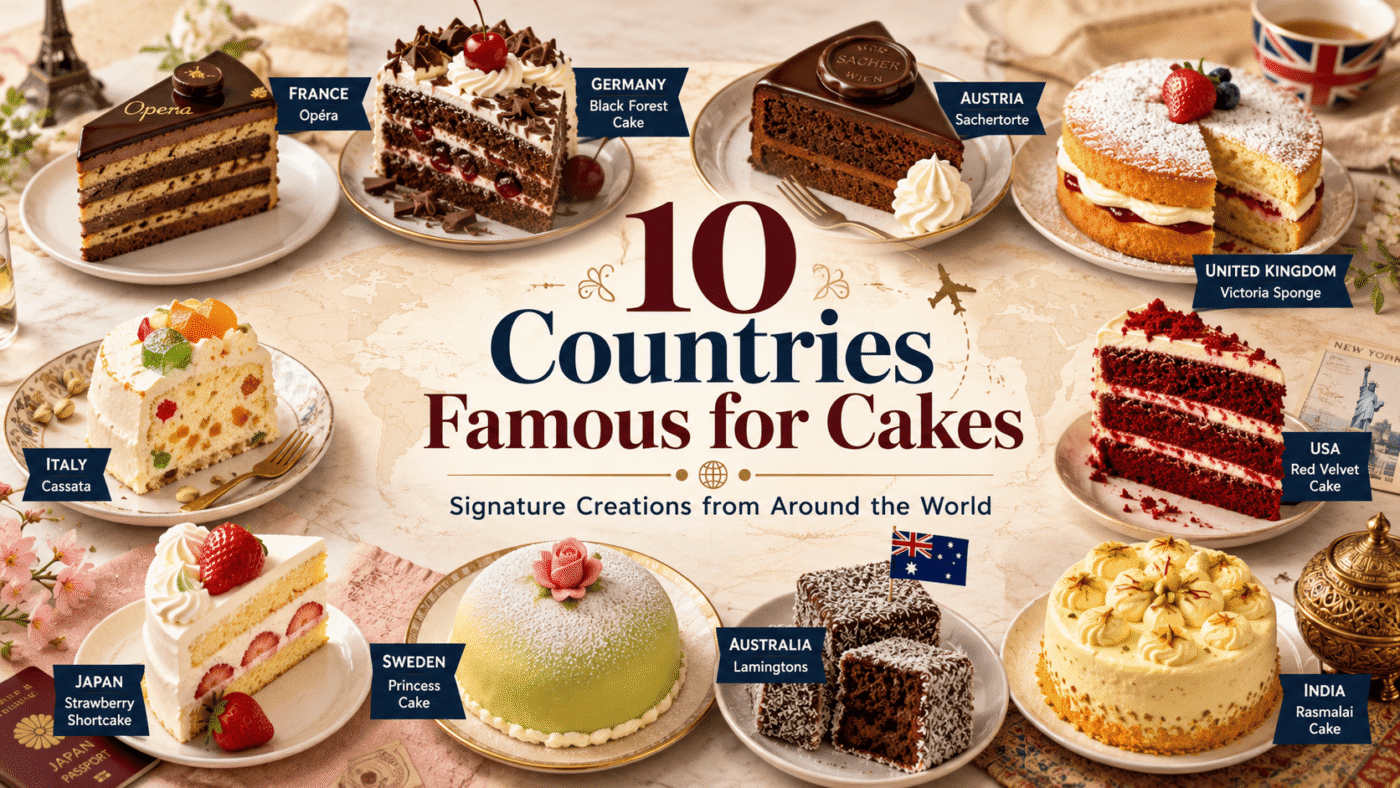
This guide explores ten countries known for memorable cake traditions and the signature creations that helped them earn international recognition.
Why Do Certain Countries Become Famous for Cakes?
A country usually becomes known for cakes because of more than one popular recipe. Its reputation may come from local ingredients, historical baking methods, café culture, festive customs or professional pastry training. A cake can also become internationally recognised when travellers, restaurants, films and social media introduce it to a wider audience.
Recipes often change when they travel. A traditional European cake may be made eggless in India, a classic sponge may receive modern fondant decoration, or a rich dessert may be made less sweet for local preferences. These adaptations do not always replace the original recipe; they show how cake traditions continue to develop.
1. France: Refined Patisserie and Layered Cakes
France is one of the strongest answers when people discuss countries famous for cakes. French pastry is known for accuracy, careful presentation and balance between sponge, cream, fruit, nuts and chocolate. The aim is often to create several contrasting textures without making the dessert feel unnecessarily heavy.
Opera Cake is among the best-known French layered cakes. It usually combines almond sponge, coffee syrup, coffee buttercream and chocolate ganache. Each layer is thin, so the flavour comes from the complete combination rather than one dominant element.
Fraisier is a lighter creation made with sponge, fresh strawberries and cream. Gâteau Saint-Honoré combines pastry, cream puffs, caramel and cream in a more elaborate presentation. French techniques have influenced professional pastry kitchens around the world, including the way premium mousse cakes and modern designer desserts are assembled.
2. Germany: Black Forest Cake and Fruit-Based Baking
German baking commonly uses chocolate, cherries, apples, nuts, cream and warm spices. Many cakes have a homely appearance, but their flavours and textures can be carefully structured.
Black Forest Cake, known in Germany as Schwarzwälder Kirschtorte, is the country’s most internationally recognised cake. Traditional versions combine chocolate sponge, cherries, whipped cream and cherry spirit. Outside Germany, the recipe is frequently adapted, and many Indian versions are made without alcohol.
Baumkuchen is another distinctive German creation. It is baked in repeated layers, traditionally around a rotating spit, producing rings that resemble the inside of a tree when sliced. German apple cakes also remain popular because they combine soft cake with fruit, cinnamon and sometimes almonds or streusel.
3. Austria: Sachertorte and Vienna’s Café Tradition
Austria, especially Vienna, is closely connected with formal coffee-house culture. Cakes are not treated only as birthday desserts; they are also enjoyed slowly with coffee in cafés that value tradition and presentation.
Sachertorte is Austria’s signature chocolate cake. It is generally made with chocolate sponge, a thin layer of apricot jam and a smooth chocolate coating. The jam brings a light fruit sharpness that prevents the chocolate from tasting flat.
Esterházy Torte uses nut-based layers and buttercream, usually finished with a recognisable patterned glaze. Linzertorte is closer to a tart, with a nutty pastry base, fruit preserve and lattice top. Together, these creations show Austria’s preference for rich flavours presented in a controlled, elegant way.
4. United Kingdom: Classic Sponge and Tea Cakes
The United Kingdom has a long home-baking tradition linked with afternoon tea, school fêtes, family gatherings, weddings and Christmas. British cakes are often valued for familiarity and comfort rather than complex restaurant-style presentation.
Victoria Sponge is a simple but enduring classic made with two sponge layers and a filling of jam with cream or buttercream. Its popularity shows how a well-made basic sponge can remain memorable without elaborate decoration.
Battenberg Cake has a chequered interior wrapped in marzipan, while traditional British fruit cake uses dried fruit, spices and sometimes marzipan or icing. Carrot cake is also common in British cafés, usually paired with cream cheese frosting. These cakes suit tea-time service as well as family celebrations.
5. Italy: Regional Ingredients and Strong Flavours
Italian cake traditions differ greatly by region. Almonds, ricotta, citrus, coffee, dark chocolate and candied fruit appear frequently, and many recipes rely on good ingredients instead of thick frosting.
Torta Caprese, associated with the island of Capri, is a dense chocolate and almond cake. Its rich, slightly moist texture makes it especially suitable for people who prefer intense chocolate flavour over cream-heavy decoration.
Cassata Siciliana is a colourful Sicilian creation made with sponge, sweetened ricotta, marzipan and candied fruit. Torta della Nonna combines pastry, custard and pine nuts. Panettone, though closer to a sweet festive bread than a conventional frosted cake, is an important part of Italian Christmas baking and is now sold internationally.
6. United States: Bold Celebration Cakes and Cheesecake
The United States has had a major influence on modern birthday and celebration cake trends. Tall layer cakes, colourful frostings, drip designs, themed decorations and large portions are closely associated with American-style baking.
Red Velvet Cake is one of the country’s most recognisable creations. It has a mild cocoa flavour, a soft crumb and cream cheese frosting. New York Cheesecake offers a very different experience, with a dense, creamy filling and a biscuit-style base.
Devil’s Food Cake is known for deep chocolate flavour, while funfetti cake adds colourful sprinkles to vanilla sponge for a playful birthday look. American television, bakeries and social platforms have also helped spread interest in customised cakes, character themes and sculpted designs. Similar personalisation is now common when customers browse designer cakes online for birthdays and other celebrations.
7. Japan: Soft Sponge, Fresh Fruit and Mild Sweetness
Japanese cakes are admired for their soft texture, restrained sweetness and neat decoration. Fresh cream and fruit are often preferred over thick buttercream, creating desserts that feel lighter even when they contain several layers.
Japanese Strawberry Shortcake usually combines airy sponge, whipped cream and fresh strawberries. It is widely associated with birthdays and Christmas celebrations in Japan. Its clean appearance and gentle flavour have made it popular far beyond the country.
Japanese Cheesecake is soft and airy, sitting somewhere between a sponge cake and a dense baked cheesecake. Castella is a simple sponge associated with Nagasaki, made from a small number of ingredients and known for its fine texture. Japan demonstrates that a cake can look refined without relying on heavy decoration.
8. Sweden: Princess Cake and the Culture of Fika
Swedish baking is closely linked with fika, a social coffee break that encourages people to pause and share something sweet. Cakes, buns and biscuits are part of this everyday tradition rather than being reserved only for major events.
Princess Cake is Sweden’s most recognisable celebration cake. It has layers of sponge, pastry cream and whipped cream beneath a smooth marzipan covering, traditionally green and finished with a small decorative rose.
Kladdkaka is a sticky chocolate cake with a soft centre and a relatively simple appearance. Toscakaka combines sponge cake with a caramelised almond topping. These desserts reflect Sweden’s balance between everyday comfort and careful presentation.
9. Australia: Lamingtons and Fruit-Topped Desserts
Australian baking often feels relaxed and practical, with coconut, chocolate, sponge and fresh fruit appearing regularly. Many desserts are designed for sharing at schools, community events, cafés and family gatherings.
Lamingtons are small sponge squares coated in chocolate and desiccated coconut. Some versions are split and filled with jam or cream. Their size makes them easy to serve individually without cutting a large cake.
Pavlova, a meringue-based dessert topped with cream and fruit, has a strong cultural association with both Australia and New Zealand, and its exact national ownership remains debated. It is included here because it has become a familiar part of Australian celebrations and summer dining.
10. India: Eggless Baking and Modern Fusion Cakes
India does not have the same centuries-old European patisserie history, but its modern cake market is exceptionally varied. International cake styles have been adapted for local dietary preferences, climates, flavour choices and celebration habits.
Rasmalai Cake is one of the best-known modern fusion creations. It combines sponge and cream with flavours such as cardamom, saffron and nuts, often finished with small pieces of rasmalai. Gulab Jamun Cake follows a similar idea by blending a familiar Indian sweet with a layered celebration cake.
Mawa Cake has a richer, denser character and commonly uses milk solids, cardamom and nuts. Goan Bebinca is a traditional layered dessert made with coconut milk, eggs, sugar and ghee. Indian plum cake, especially popular around Christmas in Kerala and Goa, brings dried fruit and warm spices into the country’s festive baking culture.
India is also notable for the wide availability of eggless cakes and highly personalised designs based on cricket, professions, cartoons, photographs and family interests. Customers arranging cake delivery in Delhi can now choose between international classics and local fusion flavours, depending on availability and the type of celebration.
Which Country Is Most Famous for Cakes?
The most defensible answer depends on the type of cake being discussed. France has the strongest reputation for professional pastry technique and elegant layered desserts. Germany is widely associated with Black Forest cake, while Austria is known for chocolate tortes and café culture.
The United Kingdom stands out for traditional sponge and tea cakes. The United States has strongly influenced modern customised celebration cakes. Japan is respected for light sponge, fresh cream and controlled sweetness. India has become notable for eggless options, fusion flavours and highly personalised designs.
Therefore, calling one nation the country Most Famous for Cakes can oversimplify the subject. France may lead in classical patisserie, but another country may be more relevant when the focus is chocolate cake, cheesecake, tea cake, fruit cake or contemporary birthday design.
How to Choose a Cake Inspired by Another Country
Start with flavour rather than appearance. Someone who enjoys coffee and dark chocolate may prefer Opera Cake, while a person who likes cherries and cream may enjoy Black Forest Cake. Japanese strawberry shortcake suits people who prefer light sweetness, while Sachertorte is better for those who want a rich chocolate experience with a subtle fruit layer.
Also consider the occasion and serving conditions. Cream-based cakes need careful temperature control, especially during warm weather. Dense tortes and baked cheesecakes may require smaller portions than light sponge cakes. Marzipan-covered or highly decorated cakes can look impressive, but the recipient’s flavour preferences should matter more than visual trend.
When ordering an adapted version, check what has changed from the traditional recipe. Alcohol, eggs, nuts or gelatin may be present in some originals but removed or replaced in local versions. Customers with dietary restrictions should confirm ingredients directly rather than assuming that every version follows the same formula.
Final Thoughts
France, Germany, Austria, the United Kingdom, Italy, the United States, Japan, Sweden, Australia and India have each contributed recognisable cakes to global baking culture. Their signature creations reflect different ingredients, social customs and ideas about what makes a dessert suitable for sharing.
Instead of looking for one permanent winner, it is more useful to ask what each country does best. France offers technique, Germany brings chocolate-and-cherry tradition, Austria specialises in elegant tortes, Japan favours softness and restraint, and India continues to develop creative fusion and eggless options.
That is why the question of which country is Most Famous for Cakes does not have a single final answer. The better answer changes with the flavour, texture, occasion and style of cake a person actually enjoys.
